The Mystery of Lady Montana
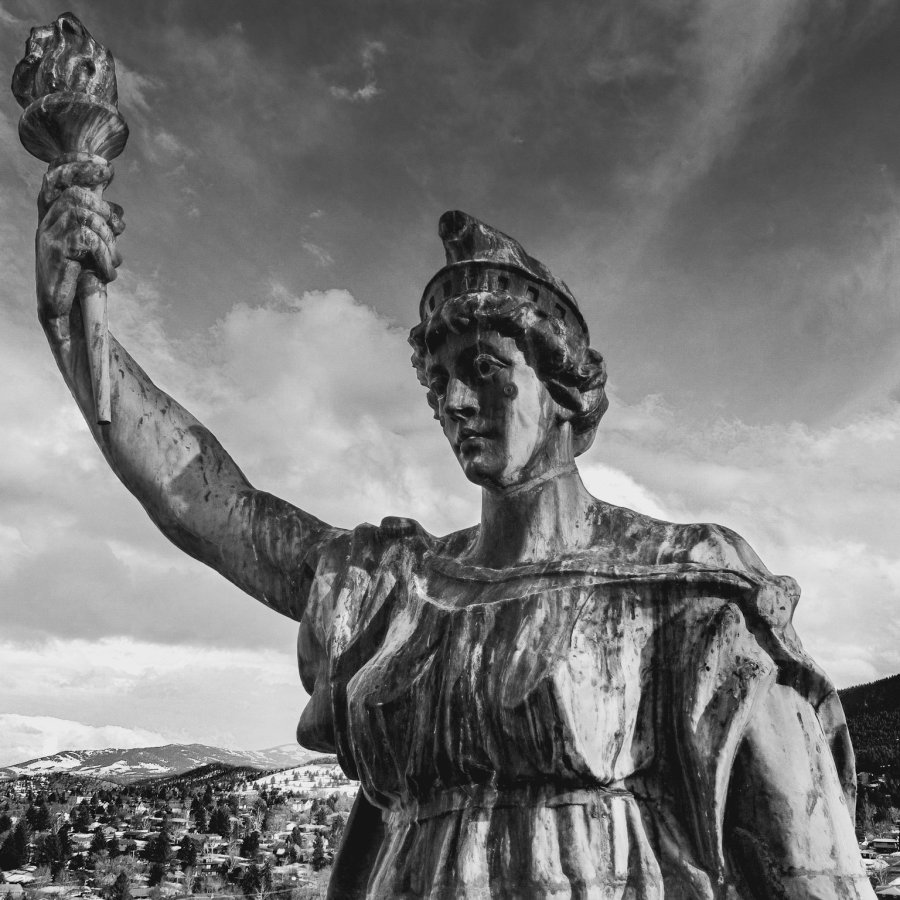
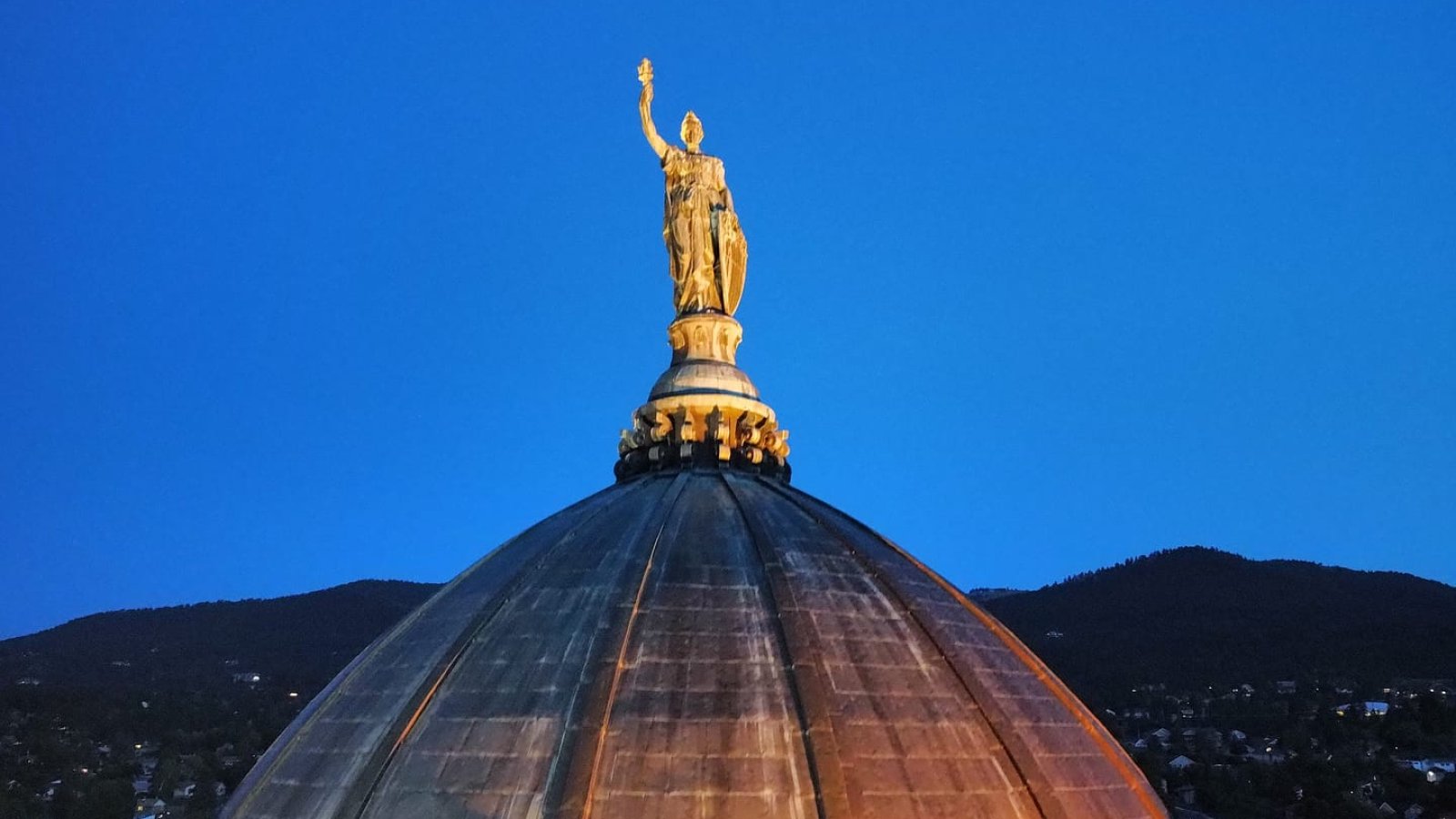
"Lady Montana" was the source of mystery for 100 years. The story goes that as the Capitol was being built in the late 1890s, she arrived at the Helena train depot unanticipated and unannounced. The Capitol Committee had not planned for a statue, but knowing something good when they saw it, they put her up on top of the dome in 1902.
The committee that received her was actually the second Capitol Committee, an emergency group formed in the wake of a scandal that led to the original committee's disbanding in 1897, when it was discovered they had stolen the equivalent of 37 million dollars. The statue was presumably specified and ordered by that first committee, one of the few things they actually accomplished before destroying all their paperwork in an effort to cover their crimes.
I imagine her showing up at the Helena railroad depot in a single rail car, in a crate: an all-copper assembly, her original armature a 2 in. copper post, 153 in. long, running continuously from the base to the top of the head, with ¾ in. copper arms radiating out to the copper skin. The new commission decided to use her anyway, even though her origin, price, why she was chosen, and even her name were mysteries.
Throughout the 100 years she stood atop the dome, she was known as Liberty or Lady Justice, but her life up there was not easy. In the 1930s a windstorm so bad twisted the statue on its base, maybe bent her, and she had to be repaired. It was then that they added extra iron girding into her body and repaired a ton of the copper tiles. Fifty years later, it was time to do it again.
By 1980 the copper skin on the Montana State Capitol dome was 78 years old and showing its age. State building officials noticed what looked like a large hole in the dome and brought in a company that normally worked on water towers and broadcast transmitting towers to go up and take a look. It was bad. "Numerous small holes were found along with scores of missing or loose screws and torn or missing panels of the 24-gauge copper which covers the dome."
The fix came together as part of roughly $8 million in state construction projects approved by the 1979 Legislature to add buildings to the campus, and the infamous Anaconda Company donated new copper panels to replace the sections of the dome that had worn through or suffered wind damage.
Two Helena men, Mike Hazen and Red Drennon, did most of the work of installing the new panels. After the work was done, they apparently couldn't resist a bit of theater. In January 1981, right around the inauguration of incoming Governor Ted Schwinden, Michael Hazen scaled the dome and placed an oversized cardboard hat, a 3-foot cardboard hat painted with the name "TED," on top of the statue. It stayed there for about a day before being removed.
Hazen later told a reporter that he and Drennon meant it as a "tribute" to the new administration and the legislative session. "We figured it would create some interest in state government, and it sure did."
In 2006 one mystery was solved when a woman called up the Historical Society and asked if her grandfather's statue was still on the Capitol's dome. She had inherited the notes and designs of Edward J. Van Landeghem (1865-1955), a Belgian-born and trained artist who immigrated to the USA and opened an art studio in Philadelphia. With one phone call, she solved a 104-year-old mystery. The copper queen, an exquisite example of turn-of-the-century civic artwork in the Beaux-Arts style, came from Van Landeghem's studio and was apparently one of his favorite projects. And the statue had a name: "Montana."
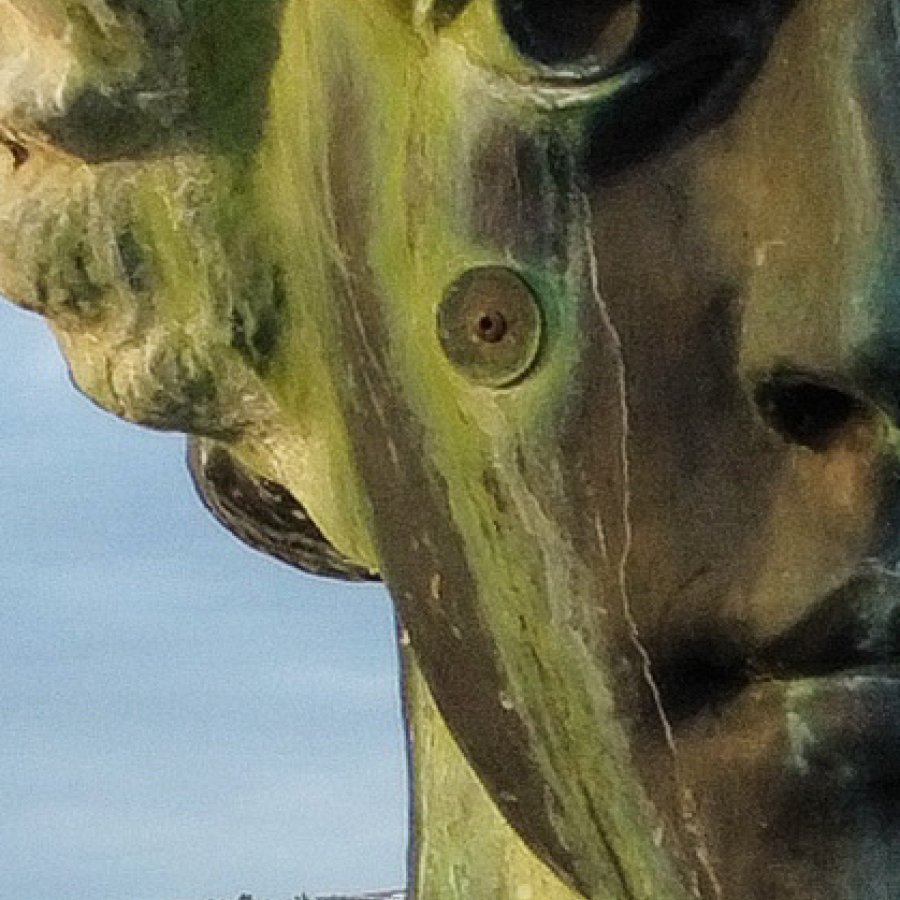
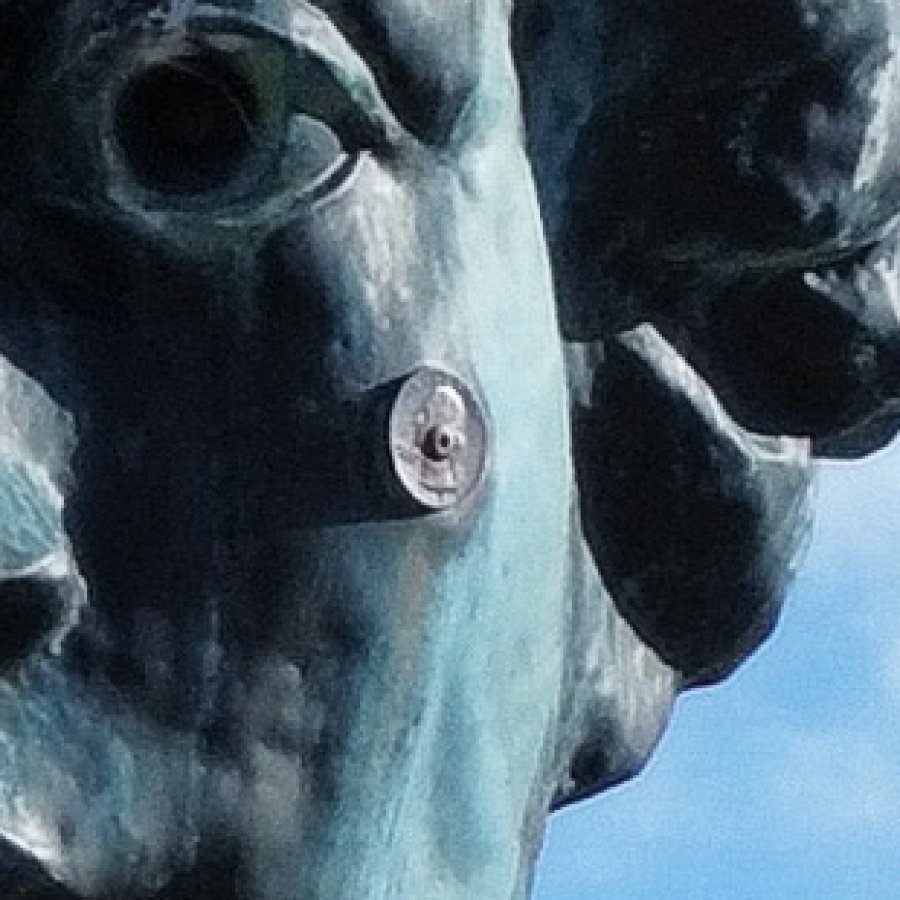
In 2023 someone provided me with very close-up images of the statue revealing the presence of two US quarters attached to the , appearing to be pop-riveted to the surface of the statue, almost like the rosy cheeks of a Raggedy Ann doll. No one I spoke with had any idea the quarters were there. There was no information about them at all. Were they original? Structural add-ons from the 1930s? The images were not high enough in resolution to make out the dates on the quarters, one piece of information that would have helped guide my research.
Now in 2026, in preparation for the statue's removal, I finally got access to images close enough to reveal the dates: 1969 and 1970.
So who pop-riveted the quarters onto Montana?
In the 1980s, Hazen and Drennon had direct, close-up access to the statue and dome. They admitted to putting a cardboard hat on Montana, so this crew is the most concrete lead so far: people who were physically up on the dome, working on and around the statue, with the tools and the opportunity to do it.
I'm working to put together some oral history so I'd love to hear from anyone with information on Michael Hazen and Red Drennon, specifically if they ever mentioned the quarters.
The story of this statue is too good to see her end up in storage. Corrupt politicians, heartfelt artists, modern cowboys: the original statue deserves a place on permanent public display!
The evidence